
Core Value of AR in Industrial Maintenance
Augmented Reality (AR) transforms traditional complex maintenance into an intuitive, visual process for the aerospace and manufacturing sectors. By overlaying digital instructions onto physical hardware, technicians can maintain a hands-free workflow while accessing critical data in real-time. This technology eliminates the need to toggle between heavy manuals and machinery, significantly reducing downtime in high-pressure environments like engine shops.
Technical Insights: Visualizing Efficiency
The shift from 600-page field manuals to 3D visual instructions directly impacts operational throughput and workforce readiness. Digital overlays provide precise spatial context, showing exactly where components reside and the specific sequence for removal and installation. These visual cues minimize the cognitive load on technicians, allowing teams to remove parts up to seven times faster than those using text-based documentation.
Installation and Maintenance Guide
Optimizing Remote Support with Smart Glasses
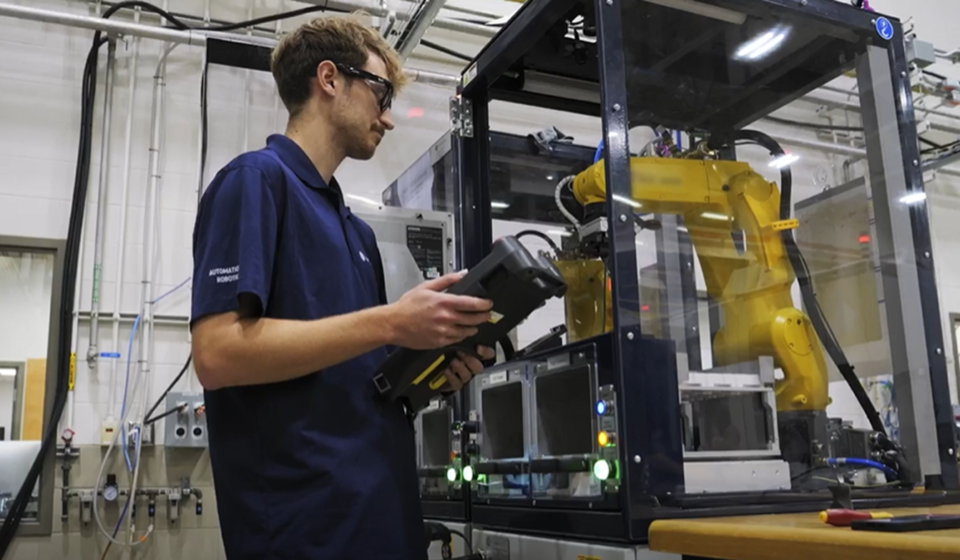
When troubleshooting robot grippers or sensor failures, use smart glasses to provide a stable point-of-view (POV) feed for remote experts. Traditional handheld devices often produce shaky video and force workers to drop the camera to use both hands for repairs. Smart glasses ensure the remote expert sees exactly what the technician sees, facilitating instant, accurate guidance without interrupting the physical work.
Enhancing Training with Risk-Free Simulators
Implement AR-based weld simulators to train apprentices in a controlled environment that eliminates raw material waste and safety hazards. We recommend using these simulators to accelerate skill acquisition by 20% before transitioning students to live welding stations. This approach allows trainees to perfect their precision and muscle memory without the high costs associated with scrap metal or energy consumption.
Buyer’s FAQ: Industrial AR Implementation
How does AR reduce the overall training cycle?
AR streamlines the learning process by providing contextual information directly on the job, which has proven to cut specific engine retrofit training from five days to three. It replaces abstract reading with immersive doing, leading to much faster skill retention.
Can AR technology improve the quality of work for experts?
Yes, advanced AR systems act as passive over-the-shoulder partners that only intervene when a mistake is detected. This prevents the interface from being invasive while ensuring that critical steps in a robotics routine are never missed.
Is this technology compatible with existing remote platforms?
Modern industrial AR solutions, such as Field Sight, integrate seamlessly with standard communication tools like Microsoft Teams. This allows frontline workers to initiate calls to global experts instantly through their wearable headsets.
What are the cost benefits of remote AR support?
By enabling high-quality remote diagnostics, companies can significantly reduce the frequency of emergency travel for senior engineers to customer sites. Resolving a malfunction via a POV call saves thousands in travel expenses and prevents extended production halts.
How does agentic AI enhance the AR experience?
Future workflows will combine AR with AI to contextualize camera feeds in real-time without human intervention. The AI can observe the work cell and offer immediate corrections, further shortening the "last-mile" digital gap for distributed workforces.