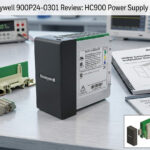


Strategic Implementation of Honeywell TDC 3000 Systems
Core Application Value of Honeywell Hardware
The Honeywell MU-PAIL02 solves the challenge of acquiring high-density analog data within a modular, rack-based DCS environment. Specifically, the hardware facilitates the monitoring of 16 independent channels, which allows for a streamlined I/O architecture. Engineers specify this industrial hardware because the integrated signal conditioning and filtering ensure that process variables remain authoritative and stable. Therefore, the Honeywell MU-PAIL02 provides a stable and authoritative sensing layer for your plant architecture. Furthermore, this focused signal management prevents data corruption and reduces system downtime in demanding process environments.
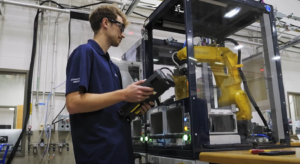
Technical Insights for Signal Acquisition
The hardware utilizes high-reliability internal circuitry to provide a seamless interface between field instrumentation and the I/O link. Additionally, the system enables rapid visual verification of module health through integrated status indicators on the card faceplate. This design ensures that the control logic maintains accurate process synchronization even during rapid signal transitions. Because the unit integrates directly with Honeywell’s configuration tools and the Local Control Network (LCN), it facilitates easy application development and point mapping. Consequently, this simplicity reduces engineering effort during system upgrades and maintenance cycles.
Robust Environmental Design Features
A ruggedized, industrial-grade build protects internal electronics from the thermal stress and electromagnetic interference typical of heavy industrial zones. Furthermore, the MU-PAIL02 design supports secure installation in the I/O card file using robust alignment rails. The system also utilizes high-reliability backplane connectors to maintain consistent data flow in demanding factory settings. This durability ensures long-term operation in critical facility zones such as control rooms and satellite instrument houses. Additionally, the module supports redundant configurations when paired with a secondary card, ensuring continuous operation in the event of a primary hardware failure. As a result, the system maintains high signal integrity during continuous, 24/7 industrial operations.
Field Installation and Maintenance Strategies
Wiring Integrity and Signal Management
Field experience shows that improper cable shielding and grounding remain frequent causes of signal noise in analog input loops. Therefore, you must verify that the Honeywell MU-PAIL02 is connected to a properly grounded Field Termination Assembly (FTA). When terminating leads, ensure that all 4 to 20 mA loops are properly powered, typically using a 250-ohm resistor at the FTA to convert the current to the 1 to 5 V range required by the card. Moreover, a mechanical necessity to protect the hardware integrity requires that you verify the I/O link cables are securely fastened. Finally, maintaining a record of specific loop tags and calibration coefficients prevents troubleshooting delays during future system maintenance.
Diagnostics and Module Troubleshooting
Technicians monitor the "I/O Status" displays on the Honeywell console to identify hardware failures or signal out-of-range conditions quickly. If the Honeywell MU-PAIL02 signals a fault, check the integrity of the FTA and the status of the I/O link power supply immediately. Also, verify that the input signals remain within the rated voltage range to avoid triggering diagnostic alarms or saturating the channel. Because a failure in an analog input can lead to a loss of process visibility, this module features advanced self-diagnostics to pinpoint internal circuit faults. Finally, perform periodic "loop audits" to verify that the field values correctly correspond to the data displayed on the operator stations.

Buyer’s Guide & FAQ
Q1: What is the primary role of the MU-PAIL02?
The MU-PAIL02 is a 16-channel High-Level Analog Input module used to bring field instrument signals into Honeywell TDC 3000/TPS systems.Q2: Is this module compatible with current loop signals? Yes, when used with the appropriate Field Termination Assembly (FTA) and precision resistors, it accepts standard 4 to 20 mA signals.
Q3: Can I replace an MU-PAIL02 while the system is running? If the system is configured for redundancy, the card can generally be replaced without interrupting the process, following Honeywell’s hot-swap procedures.
Q4: What is the difference between this and an Low-Level Analog Input (LLAI)? The MU-PAIL02 is for "High-Level" signals (1-5V), whereas LLAI modules are designed for millivolt-level signals like thermocouples.
Q5: How can I confirm the authenticity of my Honeywell hardware? Verify that the module features official Honeywell branding and a unique serial number on the identification label. Authorized channels ensure the unit meets original factory standards for high-performance automation.